_edited.png)
About Me.
Once upon a time, I began to observe patterns in the world around me. It all started with music: the relationships between chords, the structures of songs, and the rhythms that brought everything to life. Understanding patterns helped me learn quickly. This newfound interest sparked a fascination with the unique behavioral and learning patterns; those idiosyncrasies that help us navigate life in our own peculiar way. By the time I landed my first teaching job at 22, I was eager to uncover these traits in my students. Because I was an elementary music teacher, I had the privilege of watching these patterns play out over time in my students' education.
When my children came along, I decided to homeschool them, using my teaching background to guide me. My first child was an easy learner, a completer of worksheets, and a lover of colors. I gave myself credit for teaching her all those things. When child #2 came along, we experienced a completely different dynamic. He communicated not through words, but with expressive vocal inflections that were surprisingly clear, allowing us to decode his thoughts. He loved being in the dark and struggled to keep his eyes looking at paper. I gave my husband credit for those unique traits. In spite of this, he loved learning, looking at dark-colored picture books, and remembering everything he heard. Odd. Child #3 came with a beautiful, bright spirit, as all #3s do. She learned everything I was teaching her older siblings with ease. Clearly, I was a good teacher and could picture perfectly our happily ever after.
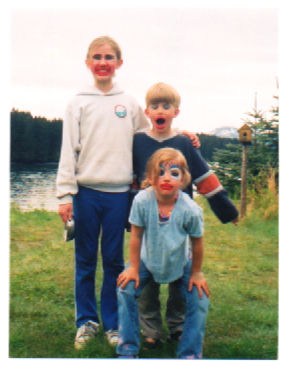
During this Once Upon A Time, life happened, as life does. I returned to teaching in the public school, with my oldest child joining me as a 3rd grader while my husband cared for our youngest two. Through this shift, we discerned that our second child could see fine but saw the world differently; he didn’t process visual language the way we did. He could add and subtract effortlessly and recognize quantities, yet struggled to connect with written numbers, despite repeatedly chanting mnemonic phrases like "around the tree, around the tree, this is how we make a three," possibly hundreds of times.
With the financial crisis over, I could stay home again, homeschooling all 3 kids. These were days of joy, wonder, and confusion. Where did the happily ever after I envisioned go? On the one side, we had fun learning by doing: we hiked to the planets, counting steps for light-years, we dribbled while spelling, we acted out scenes and stories, we made shields and swords, sewed the quilts, invented new games, doubled and halved recipes, read aloud, and embarked on exciting adventures.


On the flip side, we struggled to get along, read, talk at appropriate times, stay on task, play fair, aim for excellence, express gratitude, etc. Every August, I purchased a different Grade 1 reading curriculum for my son, yet the reading and writing piece of the holistic education puzzle was not fitting. It felt like we were either struggling with the wrong puzzle or wrestling with pieces belonging to entirely different sets. These were frustrating days of feeling lost and not enough. Of trying so hard for no gain. Of giving up. It was a time of deep struggle and frustration, a journey many of you may be familiar with in your homeschooling experiences.
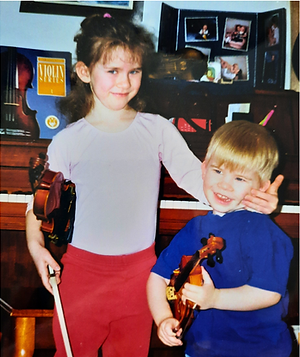
Let's circle back to music again. The oldest played piano and cello. The middle played piano and viola, and the youngest played piano and violin. We played together often, performing with the Kodiak Youth Orchestra, but while reading music posed no challenge for #2, reading words was another story. Why was there difficulty reading words? As a seasoned private piano teacher, I have noted some unusual coordinative and cognitive patterns in many of my students. I could see and understand their strengths and learning patterns, yet I struggled to see them in my own children, hampered by the fear of failure.
Once upon a time, I started journaling and never stopped. I journaled daily during this time of desperation, confusion, and self-pity. I recall writing with certainty that my son would grow up penniless, jobless, homeless, and friendless if he didn't learn to read. Every statistic said so. Fourth grade was long behind us, and first-grade reading was still challenging. He HAD to learn to read!
We can battle reality, but history teaches us that we will lose every time. One day, perhaps wearied by the fight, I chose instead to reflect on the values I wanted in our homeschool. This was my answer: that my kids would have a close, healthy relationship with each other and my husband and me, I would honor my decisions and not choke on my choices, and I would keep a close relationship with God. That was it—reading didn’t make the cut. Feeling anxious about a homeless, penniless, jobless, friendless kid wasn't on that list. Getting good grades and getting into college weren't either. Those things were important to me but were not my top 3 values. Not my guiding stars.
This shift in perspective transformed my idea of a happily ever after, allowing me to embrace a new vision for our homeschool. A noteworthy event during this time was the election of Wally Hickle as our state governor. He was wise from experience and openly shared an extraordinary truth: he could not read. His wife read everything to him until his kids learned to read, and then they took turns reading to him. He was a lawyer, a state senator, and then a governor, all without learning to read.
With that knowledge, there was a remarkable transformation in our homeschool. Anytime our son asked anyone how to spell any word or what s-t-o-p spells, for example, we would answer him immediately. If they were practicing piano, they responded without missing a beat. If they were reading a book, they answered and kept reading. No complaining, no annoyance in the voice, just an answer. The capability to read is a gift. Not everyone has it. Value it and help those who need it. With that settled, we got along with less friction, and I saw my son's future differently: he could grow up to be governor! Time we all stepped it up.

Realizing there was no existing curriculum for non-readers, I pondered how to teach subjects like science, history, and math to a non-reader while upholding high standards for my readers. The answer? To create our own curriculum. How would I manage the time? By empowering the kids to take charge of their work. How could I keep track of it all? By entrusting them with that responsibility. These skills are essential for any future governor, don't you think?
So once upon a time, I put together my first homeschool curriculum. The goal was to cram as much knowledge as possible into their minds. It's good to know things!! I later understood that while it is good to know things, it’s better to be able to apply what we know to build knowledge and wisdom. Knowing things is not knowledge unless we can use it. Over time, I developed a clear 7-step process for creating a curriculum without any handwringing or ambivalence, applicable to short units, semesters, or year-long plans. This process is now known as the Homeschool Curriculum Lab. Journaling emerged as a crucial component of our homeschooling journey. As parents, we must continue learning alongside our children. This paradox of being both leader and learner can be daunting, but grounding ourselves in core values minimizes mental clutter. In response, I crafted a guided journal specifically for homeschooling moms titled What We Appreciate Appreciates. Additionally, I launched a coaching business to support parents as they create a homeschool they and their kids love that teaches kids how to learn (ability) to their full potential (capability) while understanding that the desire to learn is ultimately their choice.
And my kids? The oldest has established her own business, the second, after receiving an HVAC degree in college, pivoted to a new path, and is on the verge of becoming a helicopter pilot. The youngest is fulfilling her lifelong dream of being a wife and mom. It’s a much happier happily ever after than I ever imagined once upon a time.